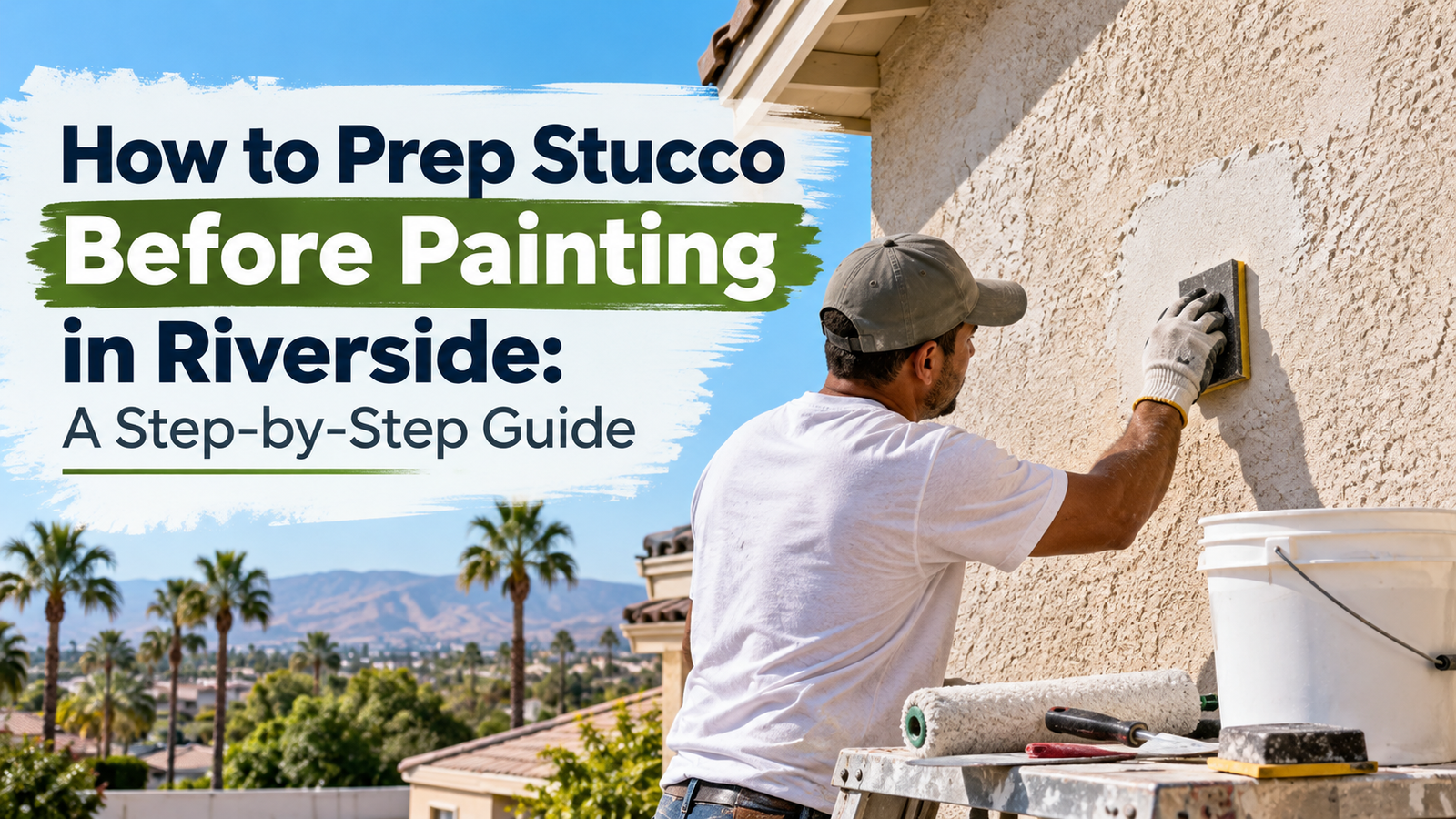
Stucco is the dominant exterior cladding material on residential and commercial buildings throughout Riverside and the broader Inland Empire. Its combination of durability, fire resistance, and aesthetic adaptability made it the default choice for California homebuilders throughout the 20th century, and it remains common on new construction today. But stucco presents specific preparation challenges before painting challenges that, if not properly addressed, lead to premature paint failure regardless of the quality of paint applied. Understanding how to properly Prep Stucco Before Painting Riverside before painting is essential for any Riverside property owner or painting contractor approaching this common project type.
Why Stucco Preparation Is Different
Stucco is a cementitious material it is essentially a thin concrete coating. Like concrete, it is alkaline when newly applied and continues to cure over months to years after application. It is porous, capable of absorbing and releasing moisture, and subject to cracking from thermal movement, substrate movement, and the natural shrinkage that occurs as cement-based materials cure.
These properties create specific preparation requirements. New stucco must cure fully before painting applying paint too soon traps moisture and can cause adhesion failure or efflorescence (white mineral deposits that migrate to the surface through the paint film). Existing stucco may have cracks, surface contamination, efflorescence, or biological growth that must be addressed before new paint will adhere properly. In Riverside’s climate, where thermal cycling and UV degradation are intense, the preparation phase determines whether a paint job lasts 5 years or 10.
Curing New Stucco Before Painting
Portland cement-based stucco requires a minimum of 28 days to cure before painting, and in Riverside’s hot, dry summer conditions, additional cure time may be beneficial. The 28-day minimum is the standard that ensures the cement has hydrated sufficiently and initial moisture content has stabilized. Painting before this cure period can trap residual moisture that causes blistering, adhesion failure, or alkali attack on the paint film.
The high pH of fresh stucco typically pH 12 to 13 can attack certain paint binders through saponification, a chemical reaction that breaks down the paint film. This is less of a concern with 100% acrylic latex paints, which have good alkali resistance, than with older alkyd formulations. Applying a pH-tolerant primer formulated for masonry and stucco provides additional protection against alkali attack on newly cured stucco.
In Riverside’s dry summer climate, freshly applied stucco cures differently than in a humid environment. Rapid moisture loss can prevent complete cement hydration, creating a weaker surface with higher porosity. Mist curing lightly misting new stucco with water for the first week after application slows the drying process and promotes complete hydration. Properly mist-cured stucco is stronger and less porous than stucco that dried rapidly in summer heat, and it provides a better painting substrate.
Pressure Washing and Surface Cleaning
Before any patching, priming, or painting, the stucco surface must be thoroughly cleaned. In Riverside, where airborne dust, vehicle exhaust particulate, and seasonal pollen contribute to surface contamination, exterior stucco typically accumulates a significant layer of bonded and loose dirt, even on recently painted surfaces.
Pressure washing with a surface cleaner or pressure washer at 1,500 to 2,500 psi effectively removes loose paint, dirt, biological growth, and surface contamination. The pressure must be sufficient to clean effectively but not so high that it damages the stucco surface or forces water into wall assembly components. Working from the top down and keeping the nozzle moving avoids concentrating pressure in one spot.
Areas with mold, mildew, or algae require treatment with a cleaning solution before or during pressure washing. A diluted bleach solution (typically 1 part household bleach to 3 to 4 parts water) with a small amount of detergent kills biological growth effectively. The solution should be applied, allowed to dwell for 10 to 15 minutes, and then rinsed thoroughly with clean water. The stucco must be fully dry before any coating work begins in Riverside’s warm climate, this typically takes 24 to 48 hours after washing.
Crack Assessment and Repair
Stucco cracking is essentially universal in Riverside’s climate. Thermal cycling, substrate movement from expansive soils, and the normal shrinkage of cement as it cures all contribute to crack formation. Before painting, every crack must be assessed and appropriately repaired painting over unfilled cracks allows water to infiltrate behind the new paint film, which will cause the film to fail at the crack and eventually peel.
Hairline cracks less than 1/16 inch wide can often be adequately addressed by elastomeric paint or a masonry crack filler applied during the painting process. These products bridge hairline cracks and accommodate the small movement that caused them. For cracks wider than 1/16 inch, dedicated caulk or stucco patch compound should be applied before painting.
Cracks at control joints, corners, and penetrations (around windows, doors, hose bibs, electrical outlets) are particularly important because these are locations where moisture infiltration is most likely. Polyurethane or paintable silicone caulk applied to these joints provides flexible sealing that accommodates the movement that causes cracking at these stress concentration points.
Stucco that has delaminated separated from the underlying lath or prior coat sounds hollow when tapped and must be removed and re-stuccoed before painting. Painting over delaminated stucco is temporary at best; the delaminated sections will eventually fall away, taking the new paint with them. Probing the surface by tapping systematically with a rubber mallet identifies hollow areas that need re-stuccoing.
Efflorescence: What It Is and How to Remove It
Efflorescence is the white, chalky mineral deposit that forms on stucco and masonry surfaces when water moves through the material and deposits dissolved mineral salts on the surface. In Riverside, efflorescence is most common on surfaces that receive moisture infiltration near window openings where seal failures allow water intrusion, at grade level where soil splash-up wets the stucco, or on surfaces with prior hairline cracks.
Efflorescence must be removed before painting because it prevents good paint adhesion paint applied over efflorescence bonds to the loose mineral deposit rather than the stucco itself, and the deposit eventually releases from the surface, taking the paint with it. Dry brushing with a stiff bristle brush removes loose efflorescence. Persistent deposits require treatment with diluted muriatic acid (typically 1 part acid to 10 to 15 parts water) applied by brush and immediately neutralized and rinsed. Muriatic acid is a strong irritant; full personal protective equipment and thorough neutralization and rinsing are required.
After removing efflorescence, the underlying moisture source should be identified and corrected if possible. Painting without addressing the moisture pathway simply causes new efflorescence to form through the new paint film.
Priming Stucco Before Painting
Priming is not optional on stucco it is a critical step that determines paint adhesion and longevity. A masonry primer or acrylic bonding primer penetrates the porous stucco surface, seals the pores to reduce excess paint absorption, and creates a uniform surface for the finish coat.
Stucco’s high porosity means that unpainted stucco can absorb enormous amounts of paint the first coat disappears into the surface without forming a complete film. This “suction” effect is reduced by priming: a properly primed surface absorbs much less finish coat and produces a more uniform appearance with better coverage. Without priming, achieving complete coverage may require three finish coats instead of two.
In Riverside’s climate, where thermal cycling and UV demand the best possible adhesion between paint and substrate, priming also provides a mechanical and chemical bonding interface that improves the performance of the entire paint system. Skipping primer to save time or cost is a false economy it shortens the service life of the finish coat on a surface where paint application is already labor-intensive.
Frequently Asked Questions: Prepping Stucco Before Painting in Riverside
How long should I wait before painting new stucco in Riverside?
A minimum of 28 days after the final stucco coat is the standard cure period before painting. In Riverside’s hot, dry climate, the stucco may dry faster on the surface but should still be allowed the full cure period for complete cement hydration throughout the coat depth. Testing with a pH meter or pH paper looking for pH below 10 before applying alkali-sensitive coatings provides additional confidence that curing is adequate.
What kind of caulk should be used on stucco cracks before painting?
Paintable polyurethane caulk or paintable siliconized acrylic caulk is appropriate for stucco cracks at control joints, window and door perimeters, and penetrations. Pure silicone caulk cannot be painted and should not be used where it will be covered by paint. For hairline cracks in the stucco field, elastomeric masonry crack filler or elastomeric paint applied over the area is the typical approach.
Is it necessary to apply primer before painting over existing stucco?
Yes primer improves adhesion, reduces porosity and uneven absorption, and extends the service life of the finish coat, particularly in Riverside’s demanding UV and thermal environment. When repainting over existing intact painted stucco that is in good condition, a bonding primer or masonry prime coat is still recommended. When painting bare or newly patched stucco, a masonry primer specifically formulated for stucco is essential.
Can elastomeric paint be applied over regular exterior paint on stucco?
Yes, in most cases elastomeric paint can be applied over existing exterior paint in good condition (well-adhered, not chalking or peeling). If the existing paint is chalking significantly, it must be completely removed through pressure washing and mechanical preparation before elastomeric coating is applied. Elastomeric over poorly adhered paint will simply peel along with the failing underlying paint. Compatibility between the existing paint type and the elastomeric coating should be confirmed with the manufacturer’s product data sheet.